
Fedele Colantuono, University of Foggia
The Italian Law 166/2016, so-called “anti-waste” law or “Gadda Law”, came into force on 14th September 2016, and was created with the aim of limiting waste, while at the same time promoting the redistribution of surpluses and unused goods for social solidarity purposes, allocating them to those who need them most. It lays down provisions reorganizing the regulatory framework on food donation by simplifying, harmonizing and fostering the process.
The law adresses the difference between the “use by” and “best before” dates, and clarifies that food products may be donated even if their “best before” date has passed.
The “anti-waste” law also provides tax incentives for those who give away excess food free of charge.
In detail, the purposes of law 166 consist of reducing waste in each phase of food products, pharmaceuticals and other products, as second hand clothes (production, transformation, distribution and administration), through the achievement of the following priority objectives:
a) promoting the recovery and donation of excess food for social solidarity purposes, allocating them as a priority to human use;
b) promoting the recovery and donation of medicines, pharmaceuticals and other products for social solidarity purposes
c) contributing to the limitation of negative impacts on the environment and natural resources through actions aimed at reducing waste production and promoting reuse and recycling in order to extend the life cycle of products;
d) contribute to the reduction of the quantity of biodegradable waste sent for disposal in landfill;
e) contribute to research, information and awareness-raising activities among consumers and institutions on the matters covered by this law, with particular reference to the younger generations.
The anti-waste law provides the recovery of surpluses at all points of the supply chain, and not only from large-scale distribution, unlike other EU countries.
In Italy, the average quantity of food wasted is lower than the EU average (149 kg compared to 173 kg). Considering the agrifood supply chain in Italy, the agricultural sector donates 34% of the surplus produced in the entire sector, with 18% of companies choosing to valorize their surplus food by saving it from waste through the practice of donation.
The Italian food bank “Banco Alimentare” is committed every day to intercept food (no longer sold but can still be eaten) so that it does not go to waste, building relationships with the subjects of the agri-food chain on one side and the institutional ones on the other.
In Italy there are 7,600 territorial partner organizations affiliated with Banco Alimentare (kitchens, reception centers, family homes, etc.) that offer food aid to 1,800,000 people economically disadvantaged.
The part of surplus that is not donated or reused for human consumption is defined as food waste. The materials and products that are part of it can still be valorized for environmental purposes, through recycling practices or energy and material recovery, together with non-reused waste and residues, including non-edible by-products separated from food products.
The estimate of the total quantity of surpluses valorized in the Italian agricultural sector, including donations and other forms of reuse, is equal to 637,730 tons in a year, or 1.2% of the total production of the Italian agricultural sector.
As stated by the Vice President of the Italian Commission of Agriculture and first signatory of the anti-waste Law 166/16 Dr. Maria Chiara Gadda: “the primary sector can also do a lot in terms of waste prevention through awareness initiatives with citizens and the effective use of technology and innovation. From a circular economy perspective, what cannot be donated for human consumption can also find a positive destination in animal feed or energy valorization”.
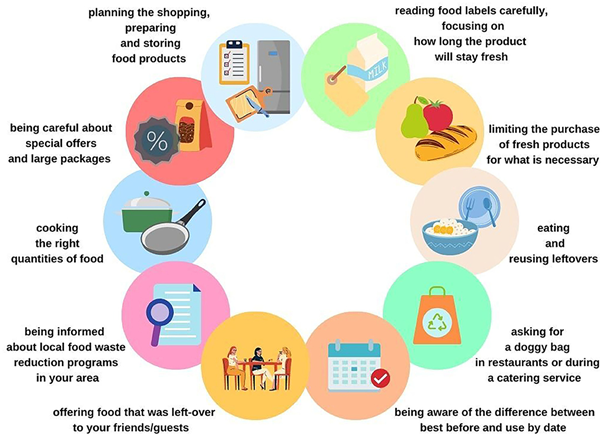
All these contribute to a perfect form of circular economy, putting citizens at the centre of a more equitable and sustainable system. It is an excellent beginning for a change of philosophy, to modify some bad habits, to innovate, create new business opportunities and become more helpful and sustainable.
References:
https://www.safefoodadvocacy.eu/wp-content/uploads/2023/11/food-donations-position-paper-29.11.pdf
https://zerowasteeurope.eu/wp-content/uploads/2020/11/zwe_11_2020_factsheet_italy_en.pdf
https://www.bancoalimentare.it/press-area/comunicato-stampa-reunion-2024