Institute of Economics and
Finance
Warsaw University of Life Sciences (SGGW)
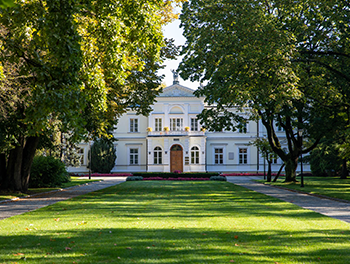
Warsaw University of Life Sciences is the oldest agricultural and natural science university in Poland dating back to 1816. The university offers 40 fields of study (including 9 taught in English): from natural science and technology to veterinary medicine, social and economic studies. Modern research centres and laboratories as well as the presence of outstanding experts, allow WULS-SGGW to educate and conduct world-class research and transfer results to the economy, which has an impact on innovation and progress in, inter alia, agriculture, food economy and medicine, and contributes to the growing importance of science in the world.
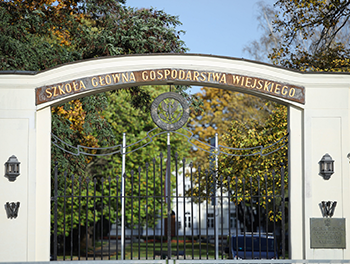
Warsaw University of Life Sciences
Nowoursynowska 166
02-787 Warsaw, Poland
sggw.edu.pl
ieif.sggw.pl
Linkedin
Instagram
YouTube
Department of Economics
University of Foggia
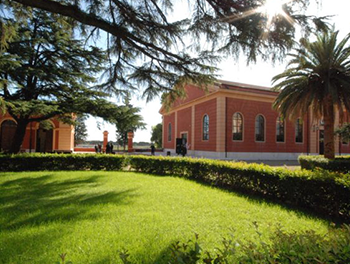
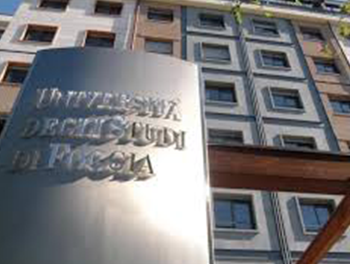
The University of Foggia (UNIFG) was set up in 1999 by decree of the Ministry of University and Research. It has seven academic faculties: the Faculty of Economics, the Faculty of Economics, Management and Territory, the Faculty of Law, the Faculty of Clinical and Experimental Medicine, the Faculty of Medical and Surgical Sciences, the Faculty of Agricultural Sciences, Food and Environment and the Faculty of Humanities, which comprises literature, cultural heritage and educational sciences. It offers 16 first level degree courses, 15 second level degrees, 18 master’s degree courses and six PhD courses to approximately 11,978 students (2020/2021). It has around 384 teaching staff, 35% of which are under 40 years old. A range of foreign language courses are available for students at the University Language Centre, as well as Italian courses for incoming Erasmus students. With a selection of rooms and multimedia tools, it is equipped to offer language teaching and certificates that are recognised across Europe. It also has agreements with 20 foreign universities to welcome international students, as well as through Socrates/Erasmus, Leonardo and TEMPUS media programs.
The Department of Economics is the scientific responsible of the CL4Bio project within the UniFg. The involved team, with different professors and researchers, is experienced in research activities and projects management mainly on Circular Economy, Agricultural Economics, Rural development, Education, innovative training, studies and analyses on different fields. Given the direct relationship with the surrounding environment, local SMEs and different categories of stakeholders (municipalities, policy makers, citizens, companies, public bodies, etc), the UniFg team has always been available to listen to their needs and propose new solutions also coming from their experience and research results. This is a plus that UniFg intends to share with the CL4Bio consortium in order to contribute with a real environment for the skills growth of students and future citizens. There are good examples of local companies, hubs and facility centers operating on the territory for renewable energy and circular / bio economy, already in touch with the UniFg and available for cooperation. Their practical expertise can support the research coming for HEIs to develop real changes and represent good practices also in other environments, thanks to knowledge sharing, new networks, students and teacher mobility, etc. In this sense, the UniFg is willing to share all the expertise on training, research initiatives and projects in the field of Economy, Circular/Bio Economy and Rural Development. Moreover, the UniFg team has cooperated on different EU funded projects (Horizon Europe, Horizon 2020 and Erasmus+) such as: COREnet (to establish a EU network of advisors on shortfood supply chain), SKIN (dedicated to the development of a thematic network about short food supply chain), NUCIF (dedicated to the Circular Economy and capacity building for South American Universities), STAND (aimed to transfer good practices on University autonomy for new Management, Administration and Financing systems in Balkans Universities), eTOMATO (dedicated to the training and orientation for Multifunctional Agriculture entrepreneurial opportunities) and recently CL4Bio.
University of Nicosia
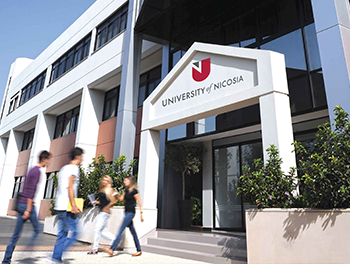
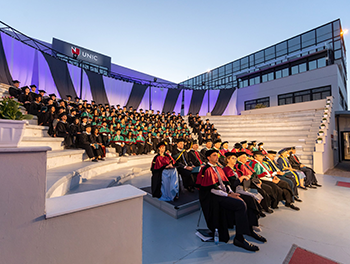
The University of Nicosia (UNIC) is one of the leading comprehensive research-oriented universities in the Mediterranean region, committed to teaching, research and innovation, sustainability, societal engagement and contribution to culture.
The University offers more than 100 conventional face-to-face (on campus) and distance learning online programmes at the Bachelor’s, Master’s and Doctoral degree level, hosting more than 14,000 students from over 100 countries.
UNIC conducts extensive high quality basic, applied, and interdisciplinary research that benefits society on a national and global scale. Our teaching and research staff excel in many academic disciplines and are acknowledged for their contribution to the creation and advancement of knowledge and technology transfer, with a particular focus on emerging technologies of the Fourth Industrial Revolution and their impact on society.
Our focus on implementing the “Knowledge Square” through actively engaging with research centres, industry, and society, ensures that our programmes are designed and enhanced in close collaboration with related stakeholders. This focus results in programmes that address industry needs and are accredited by relevant professional bodies, correspondingly preparing graduates for a global career in today’s evolving workplace.
The University’s academic standing and global outlook have been reflected in outstanding results in international rankings. Indicatively, UNIC has been recognised by Times Higher Education (THE) World University Rankings 2023 as being among the top 2% of universities in the world.
UNIC’s main campus is located in Nicosia, the capital of Cyprus, an EU-member state.

University of Aveiro
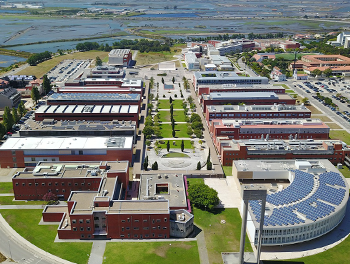
University of Aveiro is a young university, founded in 1973, with over 15000 full-time students (graduate and postgraduate). Furthermore, the academic community has about 1,400 teachers and researchers, and 630 technical, administrative and management staff.
The organisation of the University of Aveiro (UA) is based on a matrix structure, which integrates the university and polytechnic education sub-systems, and as such involves permanent interaction between its various units, services and other structures. It fosters interdisciplinary and flexibility through the organisation and management of its activities and objectives, as well as openness to society and close links to the local business environment.
The UA is therefore made up of organisational units within the university sub-system (16 departments) and the polytechnic sub-system (four schools), which include the teachers responsible for teaching their courses. An integral part of the university’s structure are a set of units dedicated to various research activities, and within the framework of the third university mission (cooperation with society), there are interface structures that establish links with the both the local region and society as a whole.
The University is also equipped with common governing and global management entities responsible for scientific and pedagogical functions, as well as unit-level organisations and other hierarchical structures. Equally, a fundamental part and parcel of the organisation are a series of services run by the university’s administrative services which embrace the overall activity of the institution.
The University has a strong research profile, a unique model of governance (16 Departments, 4 Polytechnic Schools and various training centres), acting as a regional network for education and training while promoting strong links with the surrounding community, and is a pioneer in launching degrees in new subject areas. The BMD (Bachelor, Master, Doctorate) structure is fully implemented and learning outcomes are introduced. Recognition of prior learning is also implemented, for those who do not have the formal entrance requirements. The University has been a member of the European Consortium of Innovative Universities, the ECIU, since 1998 as well as several other international university networks of excellence and, since 2019, a member of the ECIU University under the EU Universities initiative.
UA also runs several joint doctoral programmes with other Portuguese Universities and is one of the Portuguese institutions participating in the programme of collaboration between Portugal and Carnegie Mellon University for the development of postgraduate programmes and research in the field of ICT. At the same time, the development of a Creative Science Park off campus is an example of the way in which the university has encouraged both innovation and commercialization linked to research. It has also provided resources for its research policy through funding and the provision of high-quality researchers and researcher mobility.